
10 Puzzle Ideas for your Tabletop Role-playing Game
Creating puzzles or riddles for a tabletop RPG is a tricky balancing act. You need something challenging enough to feel rewarding, but not so difficult that the group spends an entire session stuck on a single obstacle—or so easy that the solution is obvious the moment it’s described.
There are many ways to soften that balance (enough to fill an article on their own), but here are a few tried-and-true techniques:
- Allow skill checks to provide hints or partial insights.
- Have an NPC offer a clue or nudge.
- Include an alternate solution or way around the puzzle.
- Let the players’ best idea be the solution, even if it wasn’t your original intent.
- Interrupt the puzzle with an encounter that reveals a clue.
The puzzles below are intentionally semi–self-contained, which actually makes them harder to design. Long campaigns can sprinkle lore and clues across multiple sessions, but that assumes players take good notes and remember details weeks later.
About half of these puzzles were used in our 5 Challenge Quests Sidequest Deck, where each mini-adventure is only five or so locations long. Most of those quests include: a puzzle or riddle, a social encounter, a combat encounter, a twist, and a reward.
Because these sidequests are short, we couldn’t rely on heavy foreshadowing or long chains of clues.
1. Fireball Riddle
The bodies of four thieves are scattered across a scorched chamber. Everything in the room—including the corpses—is burned. A reinforced door stands at the far end, almost impossible to open by force. Above it are glowing runes:
“To open, pour the water that fire conquers into the slot.”
If oil is poured into the slot, the door opens. Any other substance triggers a fireball blasting outward.
The burned bodies act as a clear warning. If this feels too easy, you can increase the difficulty by changing the wording to “the rock that fire conquers,” forcing the players to locate coal. You might place coal nearby to keep this as a puzzle rather than another full side quest. For an even tougher variation, require the substance to already be burning when it’s poured into the slot with the clue worded as “water/coal conquering fire”.
2. Locked Door
An unusual door lock can be a puzzle all on its own. One of ours appeared on a crashed alien starship. The door had no handle—only a strange set of shallow depressions in the wall beside it.
The key clue: a dead alien outside the ship has three fingers, and there are three depressions of the same size.
To increase complexity:
- Make the lock respond only to alien physiology. A PC’s hand does nothing, but using the alien’s hand works.
- Add extra depressions (six for a three-fingered alien, for example), requiring players to determine which are actually used. Perhaps some holes are more worn than others.
3. Item-Less Statues
Over the course of an adventure, the PCs acquire magic items from defeated foes—one item appropriate to each character class (a greatsword for a Fighter, a mace for a Cleric, a lute for a Bard, a staff for a Wizard, and so on). Most of these items are gained several rooms before the puzzle so the connection isn’t obvious.
In the puzzle chamber, a sealed door is guarded by an equal number of statues. Each statue appears to be holding—or reaching for—something missing. (If the PCs are observant they’ll notice they seem to be holding something. If they aren’t observant, the statues are simply reaching.)
Placing the appropriate item into each statue’s hands opens the door. If the party struggles, you might have the door glow faintly when an item is brought near the correct statue.
This puzzle might be on the easier side but it also presents a roleplaying challenge: the characters must give up their magic items. Greedy or suspicious PCs may need convincing. You can decide whether the items are permanently fused to the statues, or fall loose after the door opens.
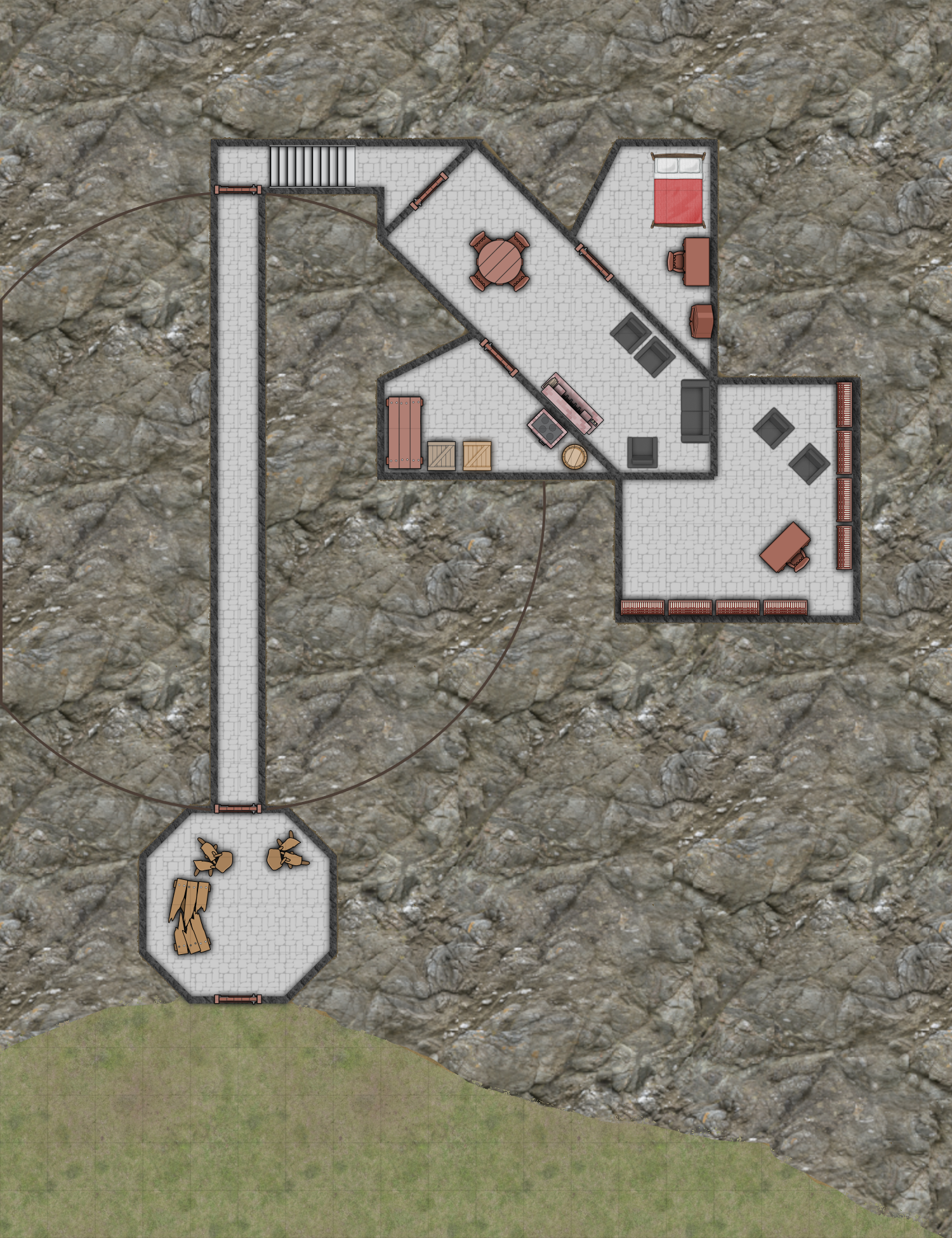
4. Cartographer’s Treasure
In this quest, the map itself is the key. The PCs seek an important item hidden in the tomb of a cartographer—or a sage who employed one. The item lies behind a secret door or even a solid wall never meant to be opened.
When examined closely the map the PCs have been creating of the area forms an arrow that points directly to the hidden location.
5. The Map Room
Inspired by Raiders of the Lost Ark—but altered so the movie solution won’t work—this puzzle centers on a scale model of a lost city.
A crystal set into a window focuses sunlight into a beam that reveals the location of a secret door on the model. The complication: the PCs must determine which day of the year the light must shine correctly. On any other day, the beam points somewhere else. It is up to the DM to give that date beforehand. For example, perhaps the map marks where an annual ceremony occurs. Usually in such a scenario the day to use when calculating the light’s location would be that day.
Then the party must also figure out how to recreate the light at the proper angle. You may even require the light to be magical illumination.
6. Follow the Color
This is a variation on the Map Room puzzle. A prism splits a beam of light into multiple colors, but only one color indicates the true path forward.
The challenge isn’t positioning the light—it’s discovering which color matters. To increase difficulty, the correct color might be invisible to humanoid eyes, requiring magic, special vision, or experimentation. You’d have to give a clue for which color is the one to follow earlier in the quest. Or perhaps something like each color leads to a different color dragon’s lair… hmmm.
7. Silence Is Golden
Perfect for a monk’s temple or a sacred, quiet place, this puzzle punishes noise.
Sound in the room is magically or by engineering amplified and channeled toward a patch of sand. As noise increases—talking, fighting, shouting—the sand pours into a container attached to a lever or scale. Once enough sand accumulates, a trap triggers, flooding the room with sand–or whatever challenge you want to throw at the party!
To keep things fair, provide subtle clues: the PCs notice sand shifting or trickling when they speak or move too loudly.
8. The False Riddle
This puzzle doubles as a social encounter. A powerful spirit blocks access to a door or artifact and demands that the party solve a riddle to pass.
The twist: there is no correct answer—at least not until the spirit is satisfied. Lonely and bored after centuries without visitors, it enjoys listening to the party debate and flatter its intelligence.
No matter what the PCs guess, the spirit claims they are wrong—until it decides it’s been entertained enough. Then it allows them through, perhaps admitting:
“Oh, it actually was the answer you gave an hour ago. I just wanted the company.”
Throughout the exchange, the spirit offers helpful—or misleading—clues, always encouraging discussion rather than frustration.
9. Balance
Inspired by another Indy move (Indiana Jones and the Last Crusade), this trap fits well in a temple devoted to neutrality or balance.
The floor of the room is mounted on a central axis. Any significant weight imbalance causes it to tilt toward the heavier side. A clue might read:
“Only those in balance may pass.”
The greater the imbalance, the faster and farther the floor tilts. PCs may need to distribute weight evenly, crawl along the axis point, or carefully plan their movement.
To increase difficulty, place the room’s entrance away from the axis—or shift the axis itself off-center.
10. Shifting Floor
This is a heavier variation on the Balance puzzle. Several massive objects—each weighing twice as much as a PC—sit on both sides of the room. It takes considerable effort to shift the floor.
Only by moving the objects and the party to one side does the floor slowly slope downward, revealing a doorway to a lower level.
For added challenge, choosing the wrong side might lead to a monster’s lair instead of the intended path. If the party struggles, let them notice subtle floor movement as they walk about the room or scrape marks from previous shifts.
One final question remains: once the floor has shifted… how do they level it again?
If you enjoy puzzles like these but don’t want to design them from scratch, Inkwell Ideas’ Sidequest Decks are built to drop directly into your campaign—complete, flexible, and ready to play.