
Monday Monsters of Rock: Lucy In The Sky With Diamonds & Teen Spirits
Progress continues on our second book of classic rock/pop/metal inspired monsters. Follow the project here to be notified on launch!
Three weeks ago we announced we are previewing two per week for the next several weeks. This post has the first two creatures. And this one has the second. And here is the third pair.
Like the first book, there are two versions: One with stats for Old-School Essentials (true to B/X D&D) and one for Shadowdark (a great merger of 5th edition D&D and old-school approaches/simplicity). Both books have the same creatures and same lore for each.
Here is a link to get the prior books from our store.
Note: The previews below are early drafts to give you an idea of where we’re going. They still need to be play-tested and get two more rounds of editing. These are the Shadowdark versions.
Lucy In The Sky With Diamonds
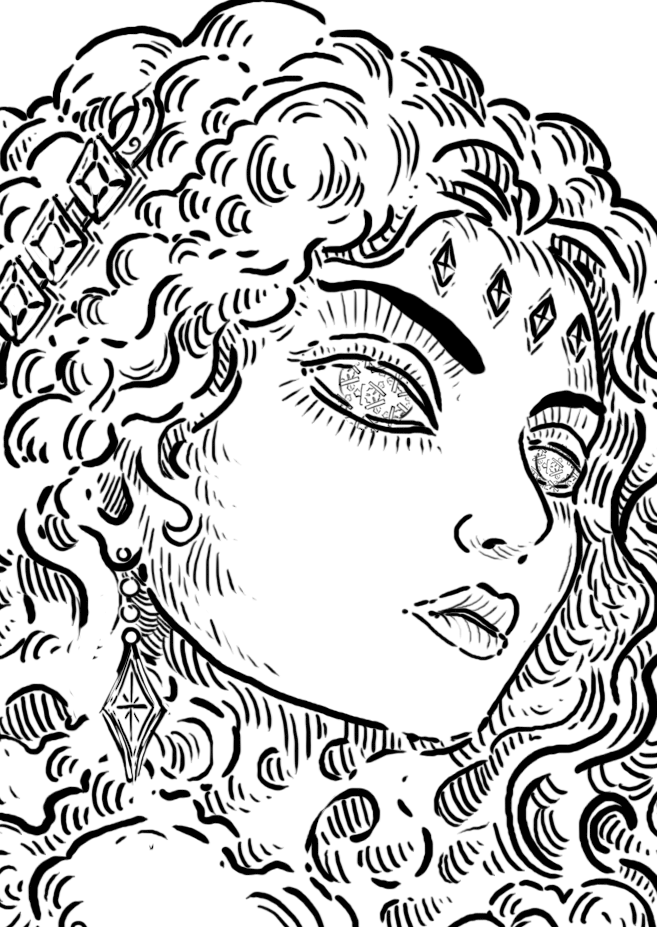
An especially curious extra-planar traveller, Lucy simply wants to learn more about the places she visits. She is ethereal, semi-transparent, and most easily seen at night when the stars are out due to her natural blue-grey tint.
AC 15 , HP 80, ATK 1 sensory overload, MV near (fly), S +3, D +4, C +4, I +4, W +4, Ch +5, AL N, LV 17
Legendary. Only damaged by magical sources. Hostile spells targeting Lucy are DC 18 to cast.
“I’m Not Wanted Here”. In place of attacks, teleport to a random location in the multiverse.
Zone of Truth. A set of three six-sided dice whose rolls cannot be magically or mundanely altered in any way.
Sensory Overload. Fills a double near-sized cube extending Lucy. DC 15 DEX or 4d12 damage.
Ethereal. Lucy does not suffer any ill effects from the natural environment she does not wish to suffer.
Sensory Overload Visions
- Tangerine trees
- Marmalade skies
- Cellophane flowers
- Rocking Horse people
- Marshmallow pies
- Looking-glass ties
Strange Questions
Lucy wants to know more about life. Here are example questions she asks:
- What does sound look like?
- What does fuzzy taste like?
- How does it feel to know you’ll die?
- What is melancholy?
- Why do you procreate?
- What is want?
Teen Spirits
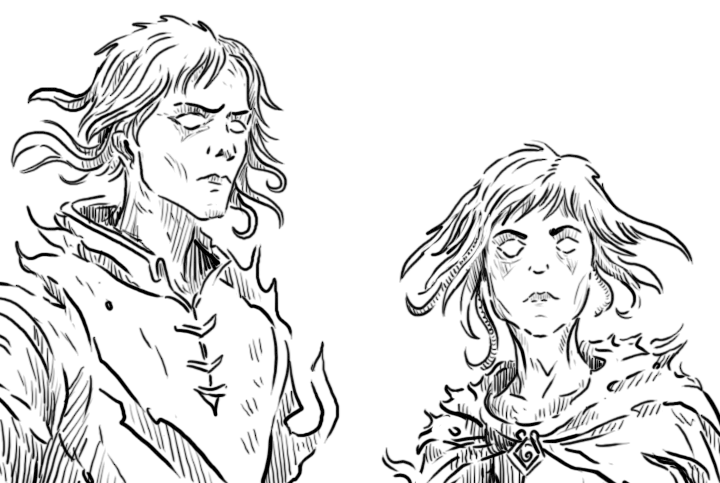
What happens when a teen passes away? Usually they move on to a natural afterlife, but some don’t for many extremely varied reasons. (See Reasons They Didn’t Pass On–and note these reasons impact the Spirit’s demeanor and abilities.)
AC 14, HP 29, ATK 3 death touch +4 (1d8 + life drain), MV near (fly), S +0, D +2, C +2, I +0, W +0, Ch +2, AL C, LV 6
Greater Undead. Immune to morale checks.
Incorporeal. In place of attacks, become corporeal or incorporeal.
Life Drain. 1d4 CON damage. Death if reduced to 0 CON.
Smell. The scent of death precedes them. They can not surprise others.
Reasons They Didn’t Pass On
Teen spirits have differing attitudes depending on how they passed on.
Unfinished Business
Perhaps they were caring for a loved one and feel the need to continue the work or were on a quest that is incomplete. This obligation keeps them tied to the world.
These teen spirits are the easiest to talk too. If they are shown that others can finish their work, they will move on. They may even assist until it is done.
Can’t Accept Death
The Spirit feels it was cheated (it died in an accident or from illness) and wishes to make sure others it feels are undeserving don’t last much longer.
This type of spirit spends its time watching the living and passing its skewed morality. With great effort it might be convinced that life isn’t fair and then pass on. But it most likely must be destroyed because reasoning with it is extremely difficult.
Revenge
It blames its death on someone else and wants to take that person down and all that is important to them.
As with those who can’t accept death, it is extremely difficult to reason with these spirits–aside from the deaths of their fixation.
Doesn’t Know It Is Dead
It fades in and out of the real world. When it is here it goes about its regular routine. Others don’t normally see it unless if is particularly emotional. It justifies its lack of interaction with others as being given the “silent treatment”.
Nevertheless, its existence has accidental negative effects on the living. It may be destroyed or convinced it is no longer alive.